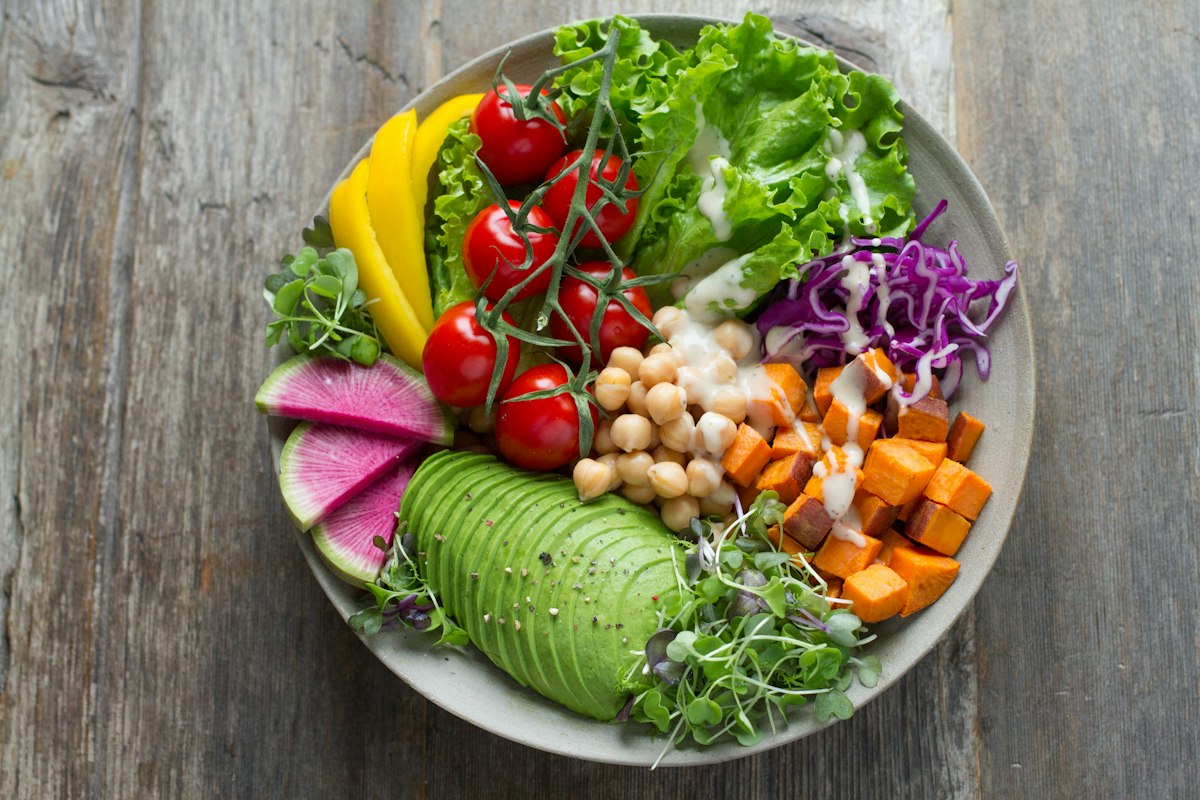

Imagine pointing your phone camera at a plate of biryani, pasta, or a salad — and getting an instant breakdown of its calories, protein, carbs, and fat. No barcode scanning. No manual searching through food databases. Just a photo.
This is exactly what AI meal scanning does — and it's one of the fastest-growing features in health tech. In 2026, AI-powered nutrition tracking has moved from novelty to genuinely useful daily tool for millions of users in India, the US, and beyond.
This guide explains exactly how AI meal scanning works, how accurate it really is, what it can and cannot do, and how to get the most out of it.
What Is AI Meal Scanning?
AI meal scanning (also called food photo recognition or photo calorie counting) uses computer vision and machine learning to automatically identify foods in a photograph and estimate their nutritional content.
Instead of manually logging "200g brown rice + 150g chicken breast + 1 tbsp olive oil," you take a photo and the AI does the heavy lifting. It identifies each food item, estimates portion sizes based on visual cues, looks up nutritional data, and delivers a calorie and macro breakdown — typically within 5 to 15 seconds.
The technology runs on deep neural networks trained on millions of food images from around the world — including Indian cuisine, American fast food, Japanese bento, and everything in between.
How Does AI Food Recognition Actually Work?
Modern AI meal scanners use a multi-step process:
Step 1: Image Analysis (Computer Vision)
When you submit a food photo, the AI runs it through a convolutional neural network (CNN) — the same type of AI that powers facial recognition and self-driving cars. The network has learned to recognize thousands of different food items by analysing patterns of colour, texture, shape, and context.
For example, it knows that a dish with orange-red sauce, visible rice grains, and bright yellow spices is likely dal or biryani — not pasta or fried rice — based on those specific visual signatures.
Step 2: Portion Estimation
This is the hardest part. The AI estimates the amount of each food using:
- Reference objects in the frame (a plate, spoon, or hand gives scale)
- Depth estimation using shadows and perspective
- Standard portion databases — the AI knows that a typical restaurant serving of dal makhani is roughly 200-250ml
More advanced systems like the one used in myHealthMate use OpenAI Vision to cross-reference visual cues with contextual understanding — "this appears to be a restaurant serving, which is typically larger than a home-cooked portion."
Step 3: Nutritional Database Lookup
Once the food is identified and the portion estimated, the AI queries a nutritional database to retrieve calorie and macro data. Quality apps use multiple database sources (USDA FoodData Central, Indian nutritional databases like NIN, or proprietary datasets) to ensure accuracy for both Western and Asian foods.
Step 4: Nutrient Calculation & Adjustment
The final step multiplies the estimated portion size by the nutritional values and presents the results. Most apps then let you adjust portion sizes manually — which is important for fine-tuning accuracy.
How Accurate Is AI Meal Scanning?
This is the question everyone asks. The honest answer: typically within 15-25% of actual calorie values for most dishes, with much better accuracy for simple, clearly photographed meals.
Research-Backed Accuracy Data
A 2023 study published in the Journal of Medical Internet Research tested multiple AI nutrition apps and found that photo-based calorie estimation was accurate to within 20% for approximately 74% of meals — comparable to the accuracy of trained nutritionists estimating portion sizes visually.
A 2024 Purdue University analysis found that the best AI food recognition systems now achieve over 90% accuracy for single-ingredient foods (an apple, a piece of chicken, a bowl of rice) and 70-80% accuracy for mixed dishes.
For Indian cuisine specifically — which features complex, mixed dishes — accuracy is improving rapidly as apps train on more Indian food datasets. myHealthMate focuses specifically on Indian and international foods to close this accuracy gap.
What Affects Accuracy?
Improves accuracy:
- Taking the photo from directly above (bird's-eye view)
- Good, even lighting — natural daylight is best
- Single-portion meals (one dish per photo)
- Common, recognisable foods
- Consistent plating (same plate size helps the AI estimate portions)
Reduces accuracy:
- Mixed dishes with many hidden ingredients (curries, stews, casseroles)
- Unusual angles or cluttered backgrounds
- Very small or very large portions vs. standard servings
- Unfamiliar regional foods the AI wasn't trained on
How AI Accuracy Compares to Manual Logging
Here's what most people miss: manual calorie logging is also inaccurate. Research from the USDA shows that people underestimate their calorie intake by an average of 20-30% when logging manually, largely due to not accounting for cooking oils, condiments, and underestimating portions.
AI scanning tends to produce more consistent estimates — even if not perfectly accurate, the error is more predictable and you can calibrate over time.
AI Meal Scanning vs. Barcode Scanning
| Feature | AI Photo Scanning | Barcode Scanning |
|---|---|---|
| Packaged foods accuracy | ★★★★☆ | ★★★★★ |
| Restaurant meals | ★★★★☆ | ✗ (impossible) |
| Home-cooked meals | ★★★★☆ | ✗ (impossible) |
| Indian / Asian foods | ★★★★☆ | ★★☆☆☆ (limited) |
| Speed | ~10 seconds | ~3 seconds |
| Requires database | No | Yes (millions of items) |
The conclusion is clear: barcode scanning is more accurate for packaged foods, but AI photo scanning is the only practical approach for the majority of meals people actually eat — especially in India, where most food is freshly prepared at home or in restaurants.
What AI Meal Scanning Cannot Do
To use this technology intelligently, it's important to know its limitations:
It cannot see inside opaque containers. If you're eating dal from a steel tiffin, the AI can only see the surface. Tilt the container or scoop some onto a plate first.
It cannot reliably estimate complex, layered dishes. A lasagne or layered biryani has hidden calories the AI cannot see. For these, combining AI scanning with manual adjustments gives the best results.
It cannot replace a registered dietitian. AI scanning is a powerful tracking tool — not a medical nutrition prescription. For people with serious health conditions (diabetes, kidney disease, eating disorders), work with a healthcare professional in addition to using tracking apps.
Accuracy degrades with very unusual or novel foods. If you're eating a dish the AI has never seen, it will make its best guess — but that guess may be quite wrong.
AI Meal Scanning for Indian Users: Special Considerations
Indian cuisine presents unique challenges for AI food recognition because:
1. Many dishes look visually similar — dal fry and dal makhani have different nutritional profiles but can look nearly identical
2. Cooking methods vary enormously — the same sabzi can have 2x more calories if cooked in ghee vs. light oil
3. Portion sizes differ from Western standards used in most AI training datasets
The best apps are addressing this by building India-specific food libraries. myHealthMate includes a food picker with 33 common Indian foods (dal, roti, idli, sambar, biryani, paneer dishes, and more) with pre-loaded nutritional data, letting you verify or correct the AI's photo estimate with accurate data for Indian portion sizes.
How to Get the Best Results From AI Meal Scanning
Take Great Food Photos
- Use natural daylight when possible
- Photograph from directly above (top-down view)
- Use a standard plate for scale
- Keep the background simple
Verify and Adjust
After the AI returns its estimate, review the identified foods and adjust quantities if needed. Most apps let you tap on an item and change the gram weight — this quick 30-second review significantly improves your weekly average accuracy.
Use It Consistently
The real power of AI meal scanning isn't perfect accuracy on any single meal — it's consistent tracking over days and weeks. Even a 15% error, applied consistently, gives you a useful picture of your dietary patterns. The data over 7-14 days is far more valuable than any single reading.
Combine With the AI Meal Planner
Apps like myHealthMate combine meal scanning with an AI-powered meal planner. Scan what you actually eat during the day, and the AI can suggest what your next meal should include to hit your macro targets — creating a personalised feedback loop.
The Future of AI Meal Scanning
The technology is advancing rapidly. In 2025-2026, we're seeing:
- 3D depth sensing using phone cameras to improve portion estimation
- Ingredient-level detection that can identify individual spices in complex dishes
- Continuous improvement through federated learning — apps get smarter as more users verify and correct AI estimates
- Integration with wearables — future systems may combine visual food recognition with post-meal glucose monitoring for diabetic users
According to Grand View Research, the AI in nutrition market is expected to reach $2.3 billion by 2030, driven primarily by mobile health apps with integrated food recognition.
Comparing the Top AI Meal Scanning Apps (2026)
| App | Indian Food Support | Photo Scanning | Free Tier | Blood Report Analysis |
|---|---|---|---|---|
| myHealthMate | ★★★★★ | ✓ Free | Full | ✓ Free |
| MyFitnessPal | ★★☆☆☆ | ✓ Premium | Limited | ✗ |
| HealthifyMe | ★★★★☆ | ✓ Free | Limited | ✗ |
| Cronometer | ★★★☆☆ | ✓ Premium | Limited | ✗ |
| Noom | ★★★☆☆ | Partial | No | ✗ |
myHealthMate is the only app in this comparison that offers free AI photo scanning plus free blood report analysis — making it particularly valuable for users who want both daily nutrition tracking and health report interpretation.
Bottom Line: Is AI Meal Scanning Worth It?
Yes — with realistic expectations. AI meal scanning is:
- Faster than manual logging (10 seconds vs. 3-5 minutes)
- Accurate enough for consistent tracking (within 15-25% for most meals)
- Particularly valuable for restaurant meals and home-cooked dishes where barcodes don't exist
- More honest than manual logging, which tends to underestimate
The key is using it consistently. Track every meal for 7 days and you'll have a clearer picture of your diet than most people have had in years — and that data becomes the foundation for real, lasting health change.
Related: AI Nutrition Tracker Guide · Best Calorie Tracker App 2026 · Complete Guide to Health Tracking
Download myHealthMate to try AI meal scanning for free — no subscription required: Get the app