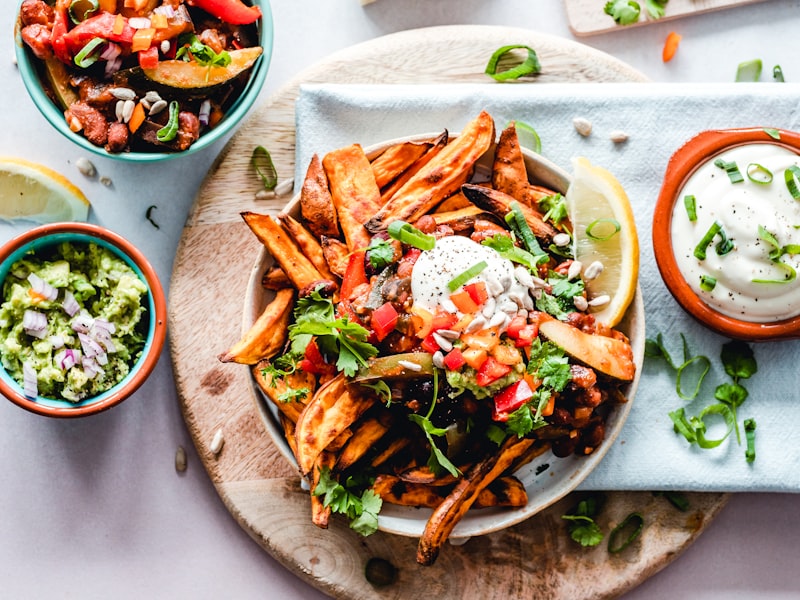

Picture this: you sit down to a home-cooked meal — dal, rice, sabzi, a roti — and instead of spending ten minutes searching a database and guesstimating portion sizes, you tap one button, snap a photo, and get a detailed calorie and macro breakdown within seconds. That is exactly what a modern AI meal scanner for nutrition does, and it is changing the way millions of people think about healthy eating.
What Is an AI Meal Scanner?
An AI food logger with calorie breakdown uses computer vision — the same technology behind face recognition and self-driving cars — to identify foods in a photograph and estimate their calorie count, protein, carbohydrates, fat, and micronutrients automatically.
Unlike barcode scanners that only work with packaged products, AI meal scanners recognise:
- Home-cooked meals (including Indian, Mediterranean, and Asian dishes)
- Restaurant plates and buffet spreads
- Mixed dishes where ingredients overlap
- Drinks, snacks, and desserts
The AI estimates portion size from the photo context (plate size, utensil scale, depth cues) and cross-references its food database to produce a per-serving nutrient report.
Why Manual Calorie Counting Fails — and AI Fixes It
Research published in the Journal of the Academy of Nutrition and Dietetics found that people underestimate their calorie intake by an average of 47% when self-reporting from memory. Even nutrition professionals mis-estimate their own portions by 20–30%.
The problem is not willpower — it is friction. Typing "aloo gobi" into a food database, finding the right entry, converting grams to tablespoons, adjusting for oil used in cooking: most people give up halfway through and log nothing.
An AI calorie counter removes all of that friction. The logging process takes 5–10 seconds instead of 5–10 minutes, which means people actually do it — consistently. Consistency is what turns data into insight.
How AI Nutrition Tracking Compares to Traditional Apps
| Feature | Manual Food Diary | Barcode Scanner | AI Meal Scanner |
|---|---|---|---|
| Works with home-cooked food | Partial | No | Yes |
| Speed of logging | 5–10 min | 30 sec | 5–10 sec |
| Accuracy for mixed dishes | Low | N/A | High |
| Macro breakdown | Yes | Yes | Yes |
| Photo evidence for review | No | No | Yes |
Key Metrics an AI Food Logger Tracks
A good free AI nutrition tracker app should go beyond just calories. Look for one that provides:
Macronutrients
- Protein — essential for muscle repair, satiety, and immune function
- Carbohydrates — your body's preferred energy source; quality matters (complex vs. simple)
- Fats — necessary for hormones, brain health, and fat-soluble vitamins
Micronutrients
- Iron, calcium, vitamin D, B12 — deficiencies in these are extremely common in India and cause fatigue, weak immunity, and anaemia
Daily Totals and Trends
The real power of an AI nutrition tracker is the weekly and monthly trend view. You might notice you consistently under-eat protein on weekdays, or that weekend eating spikes your carbohydrates significantly. These patterns are invisible without logged data.
AI Meal Planning: Beyond Just Tracking
The best AI nutrition apps do not just record what you ate — they suggest what to eat next. Based on your remaining daily macros, your health goals (fat loss, muscle gain, managing diabetes), and your food preferences, an AI meal planner can generate a personalised next-meal suggestion.
myHealthMate's AI meal planner, for example, runs a multi-step questionnaire covering your health goal, diet type, exercise frequency, cuisine preference, budget, and any food allergies — then generates a personalised 7-day meal plan complete with macro breakdowns, hydration targets, and foods to avoid. You can read more about building a complete nutrition system in our complete guide to health tracking.
What Makes a Great AI Meal Scanner App?
When evaluating a nutrition tracker app in 2026, look for:
1. Vision accuracy — Does it correctly identify your regional cuisine? Many Western apps struggle with Indian, Southeast Asian, or Middle Eastern dishes.
2. Manual override — You should be able to correct AI estimates and add custom foods.
3. Portion size flexibility — Gram-level, piece-level, and household measure support.
4. Next-meal suggestions — Proactive guidance, not just passive logging.
5. Integration with health reports — Your meal data should connect to your broader health picture, including blood sugar and cholesterol trends from your lab reports.
6. No subscription wall for basics — A free AI nutrition tracker app should let you log meals, see breakdowns, and track trends without forcing a premium upgrade.
Indian Food AI Recognition: A Growing Strength
One historically weak point of AI meal scanners was recognition of South Asian, Indian, and other regional cuisines. In 2025–2026, this has improved dramatically. Modern models trained on diverse food datasets now reliably identify:
- Dal (toor, moong, masoor), sabzi, pulao, biryani, dosa, idli
- Street foods: pav bhaji, chaat, vada pav, samosa
- Regional snacks and sweets
If your app of choice consistently mislabels Indian dishes, it is time to switch to one trained on a globally diverse food dataset.
How to Get the Most Accurate Results from an AI Food Logger
Even the best AI has limitations. Here is how to improve accuracy:
- Photograph from directly above (overhead shot) rather than an angle
- Include a size reference — a spoon, your hand, or the plate rim helps the AI estimate portions
- Separate mixed dishes if possible — photograph rice, dal, and vegetables in individual piles before mixing
- Log immediately after serving, not after eating, so portion sizes are accurate
- Confirm AI estimates using the manual edit option, especially for oil-heavy dishes
Start Your AI Nutrition Journey Today
Whether your goal is fat loss, building muscle, managing diabetes, or simply eating more mindfully, an AI meal scanner is the single most effective tool for making nutrition tracking sustainable in real life.
myHealthMate combines AI photo meal logging, a manual food database with 33+ common foods, personalised meal plans, next-meal AI suggestions, and health report analysis — all in one free app. You get the full picture of your nutrition, not just a calorie number.
Download myHealthMate on Google Play and log your first meal in under 10 seconds.
Related reading: Why Manual Calorie Counting Is Outdated (And What Works Instead) · Top AI Diet Apps Compared (2026)