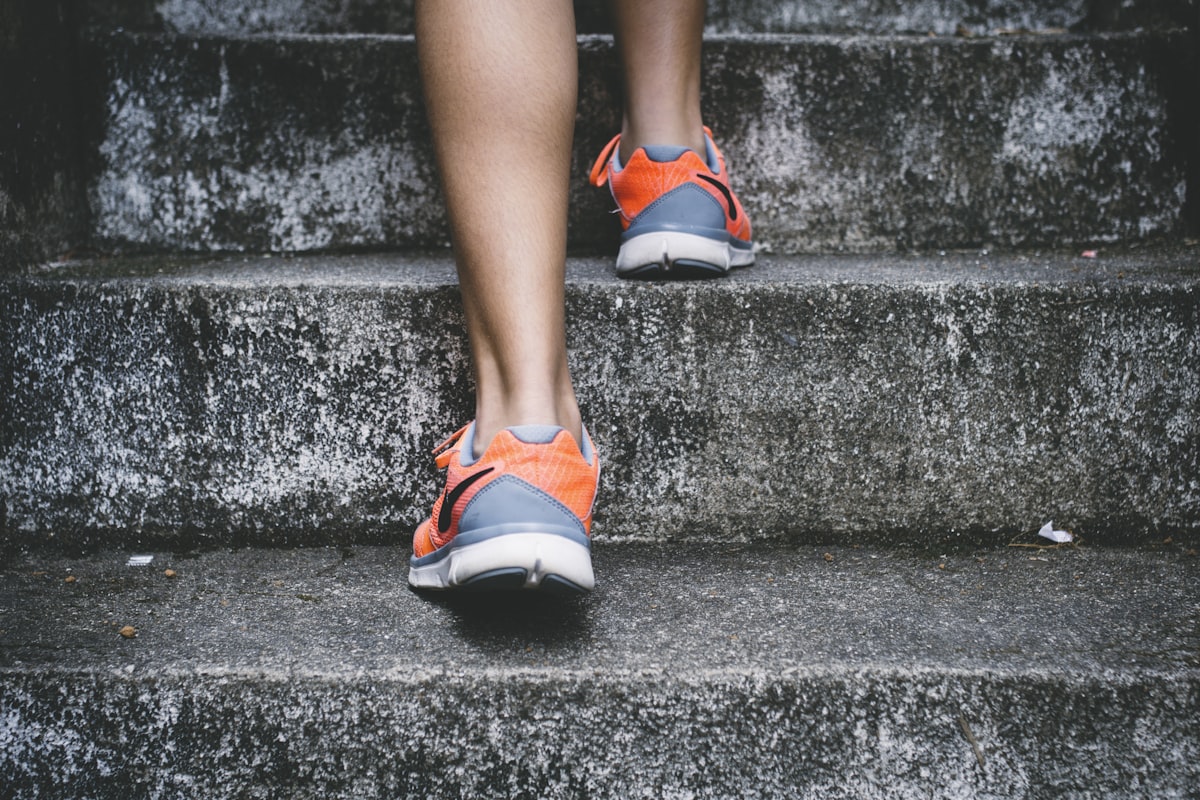

"Walk 10,000 steps a day" has become one of the most repeated pieces of health advice on the planet. It's printed on fitness tracker boxes, recommended by wellness apps, and cited by doctors. But here's the truth most people don't know: 10,000 steps was never based on science.
It originated from a 1960s Japanese marketing campaign for a pedometer called "Manpo-kei" — which literally translates to "10,000 steps meter." The number 10,000 (万歩) was chosen because it looked impressive in Japanese characters, not because researchers determined it was the optimal number for health or weight loss.
So how many steps per day do you actually need to lose weight? Here's what the research actually says.
<img src="https://images.unsplash.com/photo-1476480862126-209bfaa8edc8?w=900&q=80" alt="How many steps per day to lose weight — walking for fitness" style="width:100%;border-radius:16px;margin:16px 0;" loading="lazy" />
What the Science Actually Says About Steps and Weight Loss
The Harvard & JAMA Research
A landmark 2019 study published in JAMA Internal Medicine tracked over 16,000 women and found that:
- Women who averaged 4,400 steps/day had 41% lower mortality compared to those averaging 2,700 steps
- Benefits continued increasing up to 7,500 steps/day, after which additional steps provided diminishing returns
- The 10,000 step threshold showed no statistically significant additional benefit over 7,500
A 2021 meta-analysis in the British Journal of Sports Medicine covering 17 studies and 226,889 participants found that every 1,000 additional steps per day reduced all-cause mortality by approximately 6% — with the greatest gains seen in people increasing from very low (under 5,000) to moderate (7,000–8,000) levels.
For weight loss specifically, the most relevant research points to 7,000–8,500 steps per day as the effective zone for most adults.
The Calorie Math: How Many Steps to Burn a Pound of Fat?
One pound of fat = approximately 3,500 calories.
Walking burns roughly 0.04–0.06 calories per step, depending on your body weight and pace:
- At 60 kg (132 lbs): ~0.04 calories per step → 10,000 steps = ~400 calories
- At 80 kg (176 lbs): ~0.05 calories per step → 10,000 steps = ~500 calories
- At 100 kg (220 lbs): ~0.06 calories per step → 10,000 steps = ~600 calories
To lose 1 pound per week from walking alone, a 70 kg person would need to walk approximately 12,000–14,000 steps per day — every single day — while eating exactly at maintenance. In practice, a combination of moderate step increase + modest calorie reduction is far more effective.
Realistic target: Increase your current daily steps by 2,000–3,000 above your baseline. Combined with even modest calorie awareness, this creates a sustainable deficit that produces real weight loss.
---
Step Goals for Weight Loss by Activity Level
| Your Current Daily Average | Target for Weight Loss | Expected Weekly Deficit |
|---|---|---|
| Under 3,000 (sedentary) | 6,000–7,000 | ~500–700 cal/week |
| 3,000–5,000 (low active) | 7,500–9,000 | ~700–1,100 cal/week |
| 5,000–7,500 (moderately active) | 9,000–11,000 | ~900–1,400 cal/week |
| 7,500–10,000 (active) | 12,000–13,000 | ~1,100–1,600 cal/week |
Note: Caloric burn estimates are approximate and vary by body weight, pace, and terrain.
---
Why 10,000 Steps Won't Always Lead to Weight Loss
Even hitting 10,000 steps daily won't produce weight loss if:
1. You're eating back the calories you burn. Walking 10,000 steps burns roughly 400–500 calories for most people. A single slice of pizza, a large dessert, or a sugary coffee replaces that entirely. Steps create a caloric opportunity — it only becomes a deficit if you don't eat it back.
2. You're sitting the rest of the day. NEAT (Non-Exercise Activity Thermogenesis) — the calories burned through all movement outside formal exercise — can vary by up to 2,000 calories per day between people with similar step counts. How you move throughout the day (standing vs. sitting, fidgeting, posture shifts) matters enormously. Ten thousand steps taken in two 30-minute walks and then sitting for 20 hours is less effective than 7,000 steps spread throughout an active day.
3. Your pace doesn't challenge your cardiovascular system. A slow stroll (2 mph) burns roughly half the calories of a brisk walk (3.5–4 mph). For weight loss, brisk walking — where you can speak but not comfortably sing — is significantly more effective than casual walking for the same step count.
4. You've adapted. Just like any exercise, your body adapts to repeated walking patterns over time. Vary your route (include hills), increase your pace, or add weighted walking (wearing a light backpack) to maintain the metabolic challenge.
---
The Step + Calorie Combination: The Most Effective Approach
Research consistently shows that combining step increase with modest calorie reduction is far more effective than either alone. A 2021 review in Obesity Reviews found that combined diet and physical activity interventions produced 20% more weight loss than exercise alone at 12 months.
A practical framework:
- Add 2,500 steps above your current baseline (~100–150 extra calories burned daily)
- Remove 200–300 calories from your daily diet (roughly one snack, sugary drink, or small portion reduction)
- Combined daily deficit: 300–450 calories → approximately 0.5–0.7 lbs of fat loss per week
This may seem modest, but 0.5–0.7 lbs/week adds up to 25–35 lbs over a year — and is sustainable because it doesn't require dramatic lifestyle changes.
---
How to Actually Increase Your Daily Step Count
Knowing the target is only half the challenge. Here are practical strategies that consistently work:
- Walk during phone calls — most people make or take 5–15 minutes of calls daily; doing this standing or walking adds 500–1,500 steps
- Take the stairs every time — one flight of stairs equals roughly 20 steps and burns about 3–5 times more calories per step than flat walking
- Walk after meals — a 10-minute post-meal walk not only adds steps but significantly improves blood sugar regulation according to a Sports Medicine study
- Park farther away or get off a stop early — a 5-minute walk from a farther parking spot = 500–600 extra steps
- Use a standing desk or take movement breaks — set a reminder every 60–90 minutes; stand and walk for 5 minutes = 500+ steps
- Set visible daily goals — wearing a step tracker and checking it regularly increases daily steps by 20–30% in clinical studies
---
Using a Step Tracker Effectively for Weight Loss
A pedometer or smartwatch is one of the most evidence-backed tools for weight loss. A meta-analysis of 26 randomized controlled trials found that people who wore step trackers increased their daily physical activity by an average of 2,491 steps per day and lost an average of 1 kg more than those who didn't track.
Key things to track alongside steps:
- Active minutes (not just steps — how much time are you moving at a meaningful pace?)
- Calories burned (for a rough deficit calculation)
- Heart rate during walks (to ensure you're hitting a meaningful intensity)
- Weekly trends (not just daily — some days you'll be low, some high; the weekly average is what matters)
Track your steps, connect them to your nutrition data, and watch the combination produce real results. The myHealthMate app combines step tracking, AI meal logging, and personalized health insights so you can see exactly how your daily movement and eating patterns interact.
---
Frequently Asked Questions
How many steps per day do I need to lose weight?
For most people, 7,000–10,000 steps per day, combined with moderate calorie awareness, is an effective range for weight loss. The key is to increase your current baseline by at least 2,000–3,000 steps rather than chasing an arbitrary number. Research consistently shows that the biggest benefits come from moving more people who currently walk fewer than 5,000 steps/day.
Does walking 10,000 steps a day help you lose weight?
10,000 steps burns approximately 400–500 calories for a 70–80 kg person — roughly equivalent to the calories in one large meal. Walking 10,000 steps will help with weight loss only if you maintain a caloric deficit. Many people hit 10,000 steps and eat an extra 500 calories in reward, negating the benefit. Combine step goals with calorie awareness for real results.
How many steps does it take to burn 500 calories?
It takes approximately 10,000–12,500 steps to burn 500 calories, depending on your body weight and walking pace. Heavier people burn more calories per step; faster walking burns more per step than slow strolling. A brisk 10,000-step walk at 3.5–4 mph burns more calories than a slow 12,000-step stroll.
What is the minimum number of steps per day for health?
Research suggests that 7,000–7,500 steps per day captures most of the health benefits of walking — including reduced cardiovascular disease risk, improved blood sugar control, and lower all-cause mortality. Anything above 5,000 steps is significantly better than the average sedentary person's 2,000–3,000 daily steps.
How long does it take to see weight loss results from walking?
Most people begin to see measurable results (0.5–1 lb of fat loss per week) within 3–4 weeks of consistently walking 2,000–3,000 more steps than their baseline while maintaining a modest calorie deficit. Body composition improvements (fat loss, increased muscle tone) may be visible in 6–8 weeks even if scale weight changes slowly.
How many steps per day to lose 1 kg per week?
Losing 1 kg per week requires a daily deficit of approximately 1,100 calories — which is extremely difficult through steps alone. At 500 steps = roughly 20–25 calories, you'd need to walk 44,000–55,000 steps per day. In practice, 1 kg/week requires combining increased steps (adding 5,000–7,000 above baseline) with a significant calorie reduction of 700–800 calories per day from your diet.
---
Related: Why Am I Not Losing Weight Despite Exercise? · How to Track Calories Accurately Without a Dietitian · Complete Guide to Tracking Your Health Metrics